

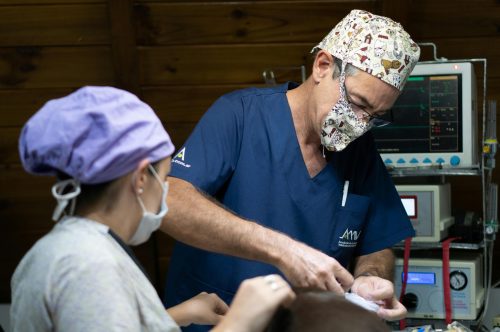
Spay/neuter isn’t just about animal welfare — it’s a public health priority. The CDC recognizes the critical role that animal welfare organizations play in rabies prevention and in protecting communities from preventable risks.
Uncontrolled populations of unowned and free-roaming cats and dogs create avoidable risks for communities:
- Zoonotic disease transmission (rabies, toxoplasmosis, parasites)
- Bite incidents and injuries, especially among children
- Traffic accidents involving stray animals
- Community stress and costs for local governments and residents
What is Spay/Neuter?
Spay/neuter means surgically preventing animals from reproducing. From a public health standpoint, it stops pet overpopulation at the source – turning off the tap so litters are prevented before they are born.


How it Connects to Vaccination
Spay/neuter and vaccination often go hand-in-hand. Vaccination may be required for surgery or as part of the service itself (for example, rabies vaccination is included during the Trap-Neuter-Vaccinate-Return, or TNR, process for community cats).
Vaccination protects both animals and people from diseases that can spread between species such as rabies. Widespread vaccination creates a community “safety shield,” reducing the chance of outbreaks and keeping people, pets, and wildlife healthier.
Spay/Neuter Protects Communities
Across the nation, many shelters are being forced to turn animals away—sending them back into communities unaltered and unvaccinated. The result is rising numbers of stray dogs and cats, with greater risks of bites, attacks, and public health emergencies that could otherwise be prevented.
Communities with proactive spay/neuter and vaccination programs see meaningful impacts:
- Lower shelter intake & euthanasia rates — fewer free-roaming animals, less public cost
- Reduced rabies exposure — more pets vaccinated and fewer strays to track
- Fewer nuisance complaints — reduced or eliminated noise, odor, and property damage from unowned animals
- Healthier, safer neighborhoods — improved quality of life for residents
- Reduced workload for animal control officers and animal shelter staff – fewer calls, fewer animals coming through the door, and less strain on limited space and resources
- More empowered staff – team members feel proud to provide solutions, educate the community, and prevent problems before they start
Fewer puppies and kittens means fewer strays, and fewer chances for people to come into contact with unvaccinated animals.
When there are fewer animals, it’s easier and more affordable to vaccinate and monitor the population.
Fewer free-roaming animals means less risk of rabies exposure, and fewer people requiring post-exposure prophylaxis (PEP).
Bottom line: No babies. No rabies.
Read more on our blog, or download our No Babies, No Rabies one-pager.